What it actually is
Tekka is D160 on Malaysia’s clone register, registered in 1987. According to SAYS, citing the enthusiast site DuriAddict, it was registered by Lim Hai Chia from a tree in Banting, Selangor, said to have grown among bamboo, hence the name: Tekka means bamboo leg in Hokkien. The country has been registering durian clones by D number since 1934, and the clone register has now passed 200 varieties.
The confusing part is the names. The same clone is sold as Tekka, Green Bamboo, Zhu Jiao (竹脚, bamboo leg again) and Musang Queen. A published copy of the Department of Agriculture’s register list gives its registered name as Buluh Bawah, though we have not been able to check the department’s own list directly. Musang Queen is a nickname coined to parallel Musang King and has no relation to it, though the label clearly hopes you will think otherwise. If you see any of these names, it is the same fruit underneath.
How to spot it
The husk is usually described as a dull greenish brown, on an oval, stout fruit. SAYS, drawing on durian guides, describes distinctive concave thorns, pyramid-like in shape, and a star pattern at the bottom that resembles Musang King’s but can be told apart from it.
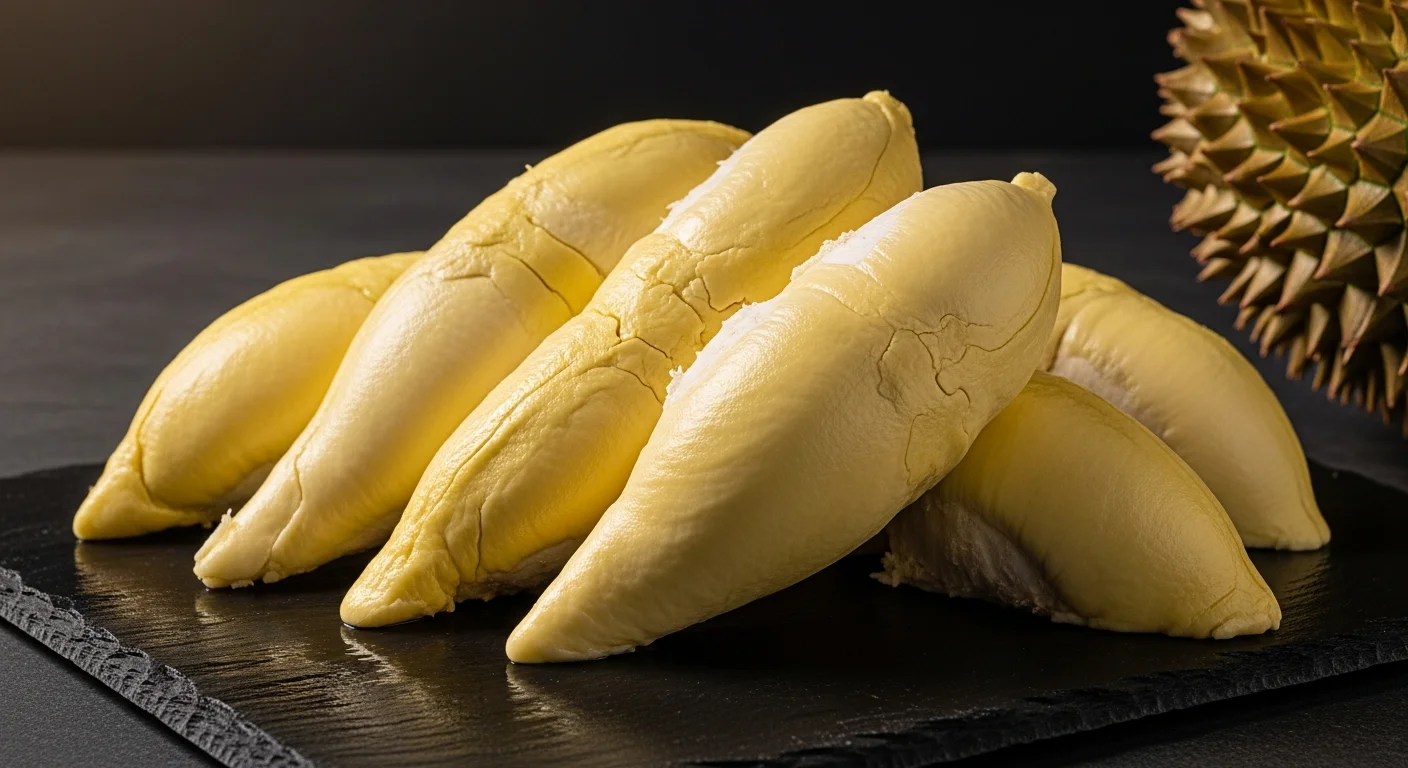
The clearest marker is inside. Once opened, Tekka has a hollow or valley running through the middle of the core, which Singapore food writer Leslie Tay calls the “longgang”, or drain, and says makes the fruit easy to recognise. The flesh is pale yellow, sometimes darker, against Musang King’s vivid turmeric yellow.
Guides disagree on seed size, so check the opened fruit in front of you rather than relying on a rule.
What it tastes like
The flesh is thick and creamy, which Leslie Tay compares to D24, but SAYS describes it as moderately wet, with slightly looser flesh than Musang King.
The flavour is the reason people seek it out. It is bittersweet, with a bitterness usually described as more assertive than Musang King’s and a distinctive aftertaste that Leslie Tay says harks back to the kampung durians of the past. If you find Musang King too sweet, Tekka is worth trying. If you want easy sweetness, it is not your fruit.
What to watch for
The main trap is the name. “Musang Queen” on a signboard is not a cheaper or junior Musang King; it is Tekka, a different clone with a different taste. The name alone is no reason to pay a Musang King price, so judge it on the opened fruit and compare its price with other Tekka, not with Musang King.
It can also be hard to find. SAYS calls it scarce compared with Musang King and says it is mostly grown in Johor and Pahang, and Leslie Tay reports low yields, with some trees cut down to make way for more commercial varieties.
On value, remember that published figures put edible flesh at 15 to 30 per cent of whole-fruit weight, so compare packed-flesh prices with packed-flesh prices, and whole fruit with whole fruit. The 2026 season page covers how prices moved this year.
Who it suits
Tekka is for the experienced eater, or the beginner who already knows they like bitterness. SAYS quotes the ranking site MyRehat as saying it is not recommended for first-timers. If your reference point is something mild and sweet like D13, start there and come to Tekka later. Eating it after a sweeter clone rather than before lets the bitterness read as depth instead of a shock.