What it actually is
D24 is one of Malaysia’s oldest registered durian clones, and a copy of the clone register says Singaporeans sometimes call it Sultan. The Department of Agriculture says it came from Bukit Merah in Perak and was registered on 30 November 1937. The same register copy calls it the “most popular clone”. Today Musang King is the better-known premium variety.
The Department of Agriculture puts a D24 at 1.0 to 1.8kg.
XO is not a separate clone. One orchard worker quoted by Kosmo calls it a variation of D24, and SAYS says its alcoholic taste comes from fermentation inside the shell. See the Malaysian clone register for how D-number registrations work.
How to spot it
Look first at the base. The Department of Agriculture lists a spine-free space about the size of a 5 sen coin at the rear of the fruit among D24’s identifying marks.
The department describes the husk as light green and the fruit as round to oval. A distinct “corky ring”, which the department also lists, is another useful clue.
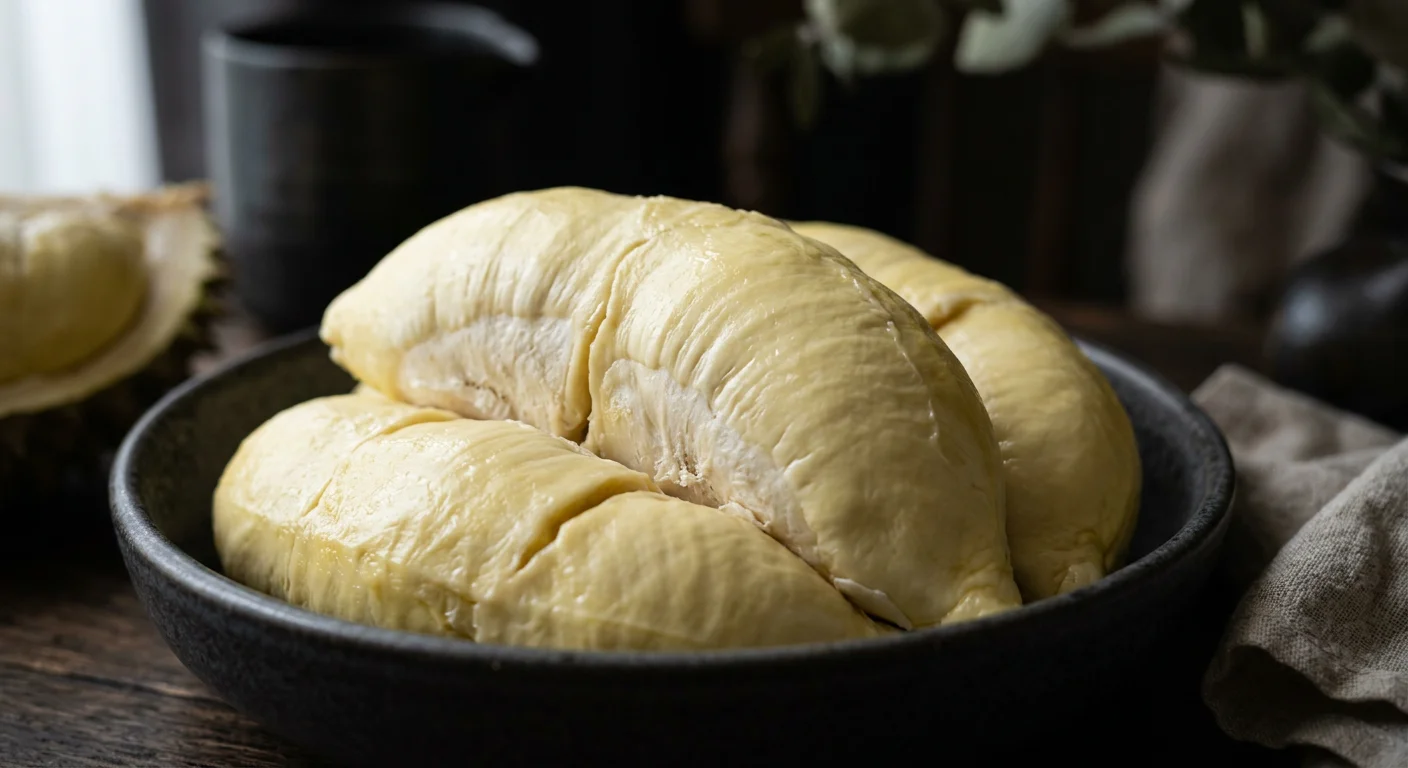
The shell is thin. The thorns are sharp, and in every five there is one noticeably smaller thorn in the middle, according to the department. Inside, look for pale yellow flesh, which is how the department describes it, rather than the stronger yellow of Musang King.
Use several markers together, not a single one. The guide to choosing durian is useful when you are checking ripeness and condition at the stall.
What it tastes like
The Department of Agriculture describes D24 flesh as sweet, rich, firm and fine-textured, with a slight bitterness.
The aroma is clearly durian, but milder: RinggitPlus calls D24 a good starting point for a first-timer “since the aroma is milder and the flavour is less overwhelming”.
Compared with Musang King, D24 flesh is paler: the department calls D24 pale yellow and Musang King very yellow, and gives both a bitter note. Compared with XO, ordinary D24 lacks the alcoholic taste SAYS puts down to fermentation. If you enjoy a fermented, alcoholic note, XO may suit you better. If that puts you off, choose regular D24.
What to watch for
The main confusion is XO. Sellers sometimes present XO as though it were a separate clone, but it has no clone number, and at least one grower calls it a variation of D24. Ask whether you are buying regular D24 or XO, especially if you do not want the fermented, alcoholic note.
Learn the word potato before you buy one. Some sellers use it for flesh that has come out dry, hard and starchy rather than creamy, which is what an under-ripe fruit gives you. It is worth knowing because it is a defect you can see and feel rather than a matter of taste: creamy is the aim, and a dry, crumbly texture means the fruit was not ready, whatever the grade on the box said. This is trade shorthand rather than a measured failure rate, so treat it as a check to make rather than a verdict on the variety.
Also compare prices properly. A whole D24 priced by the kilogram includes husk and seed, while packed flesh is priced for edible fruit only. The department gives D24 flesh as 26 per cent of the fruit, and a 2026 review in Frontiers in Nutrition puts durian generally at 15 to 30 per cent, so the two prices are not directly comparable.
Weight is worth checking too. The ASEAN durian standard gives D24 an expected range of 1.0 to 3.0 kg, so an unusually small or large one sits outside what the standard treats as typical. Musang King, listed there under its clone number D197, carries exactly the same range, so weight alone will not separate the two. That standard is also where the real quality classes come from, which are not the letters most stalls use: see how durian is graded.
D24 is usually most available during Malaysia’s main season from June to August, often into September. In 2026 a bumper harvest pushed prices down sharply in June, but the glut ended around the middle of July and prices rose again. Check the 2026 durian season update before treating a stall price as unusually good or bad.
Who it suits
D24 suits beginners who want creamy, recognisable durian with some bitterness but not too much aroma. It also suits experienced eaters who want a calmer contrast beside a stronger Musang King or fermented XO.
Try it alongside Musang King to see the difference for yourself: the paler flesh is the easiest contrast to spot.