The Quick Answer
No, they are not the same fruit. Durian is creamy, pungent, and polarising. Jackfruit is sweet, mild, and fibrous. They look vaguely similar from a distance but are completely different fruits from different plant families: durian (Durio zibethinus) sits in the mallow family, Malvaceae, with cotton, okra and cacao, while jackfruit (Artocarpus heterophyllus) is in the fig and mulberry family, Moraceae. They are not related.


Appearance
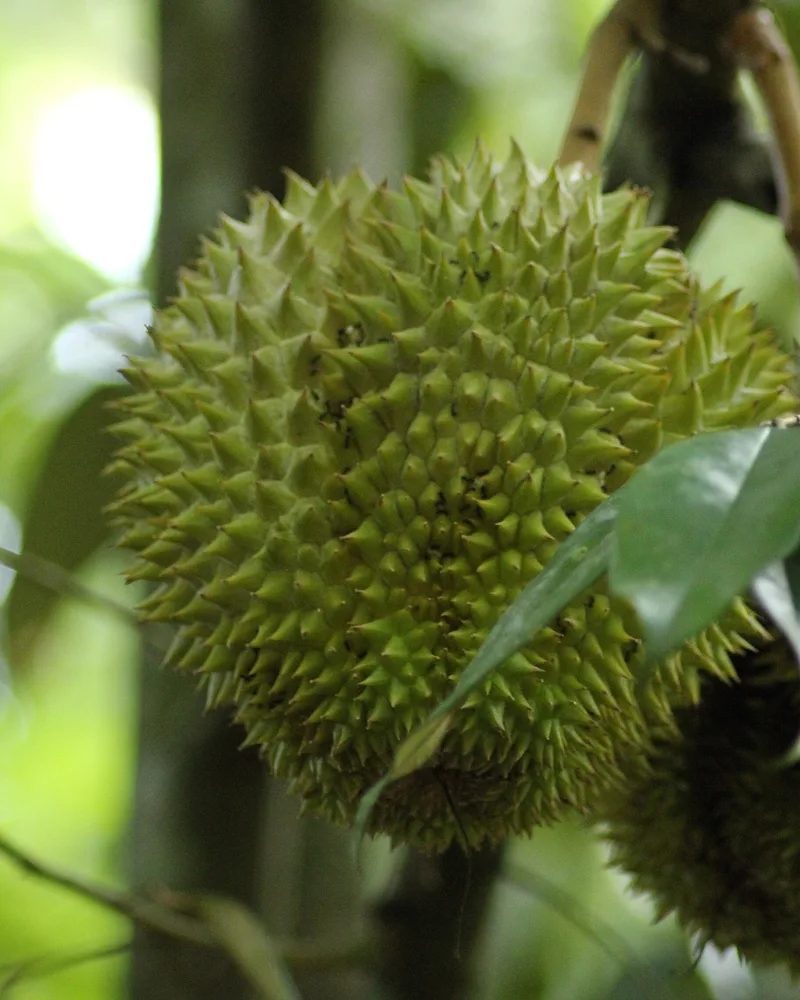
Durian
- Size: Usually 1 to 3 kg. The ASEAN durian standard gives that range for both D24 and Musang King (D197)
- Spikes: Sharp, hard, pyramidal thorns
- Colour: Brownish-green husk
- Shell: Very hard, requires a knife or skilled hands to open
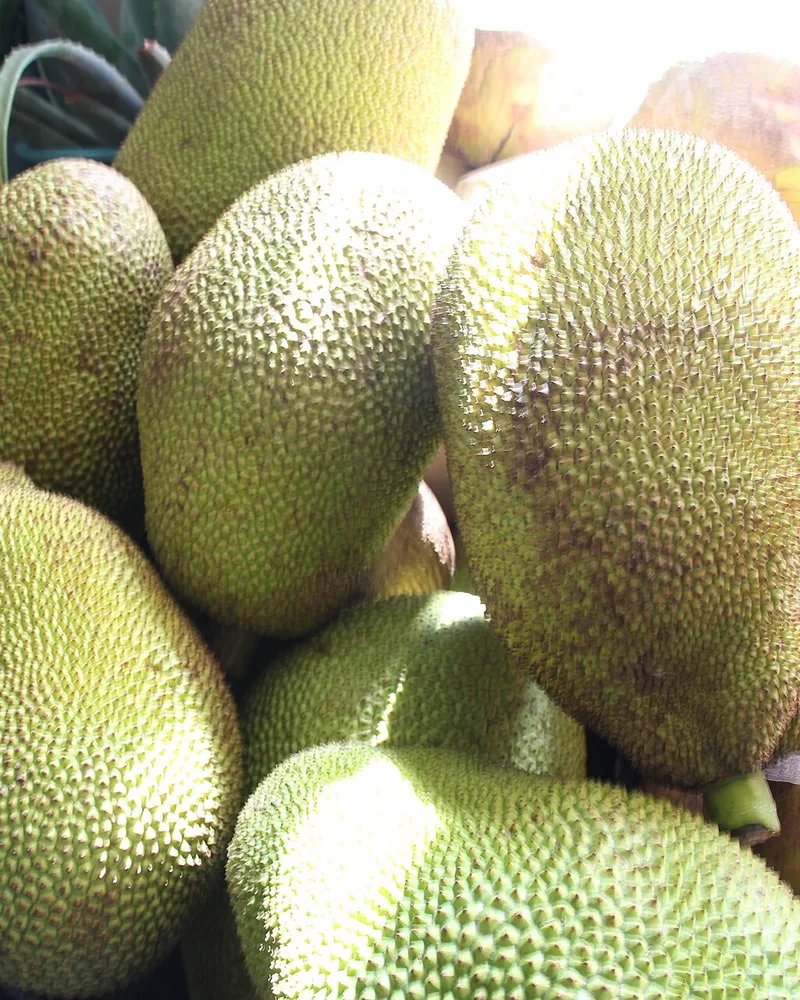
Jackfruit
- Size: Much larger, usually 4.5 to 20 kg and occasionally as much as 50 kg, according to Julia Morton’s Fruits of Warm Climates (1987)
- Spikes: Small, blunt bumps (not sharp)
- Colour: Green to yellowish-green
- Shell: Thick but easier to cut, with sticky latex inside
The easiest way to tell them apart: if the spikes can hurt you, it’s durian.
Smell
This is the most obvious difference.
Durian has one of the strongest aromas in the food world, rich, complex, and divisive. Singapore’s MRT bans it, some hotels charge a cleaning fee if it is eaten in a room, and several airlines refuse it, though at least one accepts it sealed. Our guide to where you cannot take durian sets out which. Some describe it as sweet and custard-like; others compare it to gym socks. There is no middle ground.
Jackfruit has a mild, sweet, fruity smell. Pleasant and inoffensive, and not the subject of any transport ban.
Taste and Texture
Durian
- Texture: Smooth, creamy, custard-like
- Flavour: Complex, sweet, bitter, sometimes alcoholic. Varies dramatically by variety (Musang King is bittersweet; D24 is milder; XO is fermented)
- Seeds: Large, smooth, inedible raw
Jackfruit
- Texture: Fibrous, chewy, almost meaty (which is why it’s popular as a meat substitute)
- Flavour: Sweet, mild, similar to a mix of pineapple and banana
- Seeds: Edible when boiled or roasted
Nutrition
| Nutrient (per 100g) | Durian | Jackfruit |
|---|---|---|
| Calories | 147 | 95 |
| Fat | 5.3g | 0.6g |
| Carbs | 27g | 23g |
| Protein | 1.5g | 1.7g |
| Fibre | 3.8g | 1.5g |
Figures are the United States Department of Agriculture’s, from FoodData Central: entry 168192, “Durian, raw or frozen”, and entry 174687, “Jackfruit, raw”. Our durian calories guide goes further into the durian numbers.
Durian is significantly higher in calories and fat, that creamy texture comes at a cost. Jackfruit is the leaner option but doesn’t deliver the same richness.
Cultural Status
Durian is called the “King of Fruits” across Southeast Asia. It commands premium prices, inspires fierce loyalty, and has an entire culture around seasonal eating, orchard visits, and varietal expertise. In Singapore and Malaysia, durian season is a genuine event.
Jackfruit is widely eaten but doesn’t carry the same cultural weight. It’s more of an everyday fruit, affordable, available year-round, and used in both sweet and savoury cooking (curries, desserts, chips).
Price
Durian is sold as a premium fruit and its price moves with the season. In Singapore in 2026, Mao Shan Wang (Musang King) went from about S$28 per kg at its March peak to about S$20 per kg by 23 June (AsiaOne, 24 June 2026). Our 2026 price report follows it through the year. Jackfruit is an everyday fruit, often sold cut into packs.
Can You Like Both?
Absolutely. They’re different fruits serving different purposes. Jackfruit in a curry is brilliant. Durian as a dessert experience is unmatched. The “debate” is really only a debate among people who haven’t tried both.
Related
- Durian types and their D numbers, including which names sellers get wrong
- Durian calories and nutrition
- How to choose a durian at the stall